Green Roof System Layer (Top to Bottom)
The green roof system at the demonstration site is using LiveRoof’s RoofBlue RETAIN™, a planter module with extra storage space below the plants for rainwater. Excess infiltrated rainwater is stored in the reservoir, then wicked up through fabric back into the plant growing media and root zone. Typical extensive green roof systems (those with a growing media depth of 6 inches or less) include the following layers:
• Plants (Sedum species selected for drought tolerance and shallow root systems)
• Growing media (lightweight engineered soil mix)
• Filter fabric (prevents fine particles from clogging drainage layer)
• Rigid drainage mat (channels excess water while maintaining air space)
• Moisture retention geotextile (holds water for plant uptake during dry periods)
• Root barrier (protects waterproofing membrane from root penetration)
• Waterproofing membrane (continues up and over side and back rails)
• Roof deck (plywood sheathing on pressure-treated frame)
Conventional Roof Side
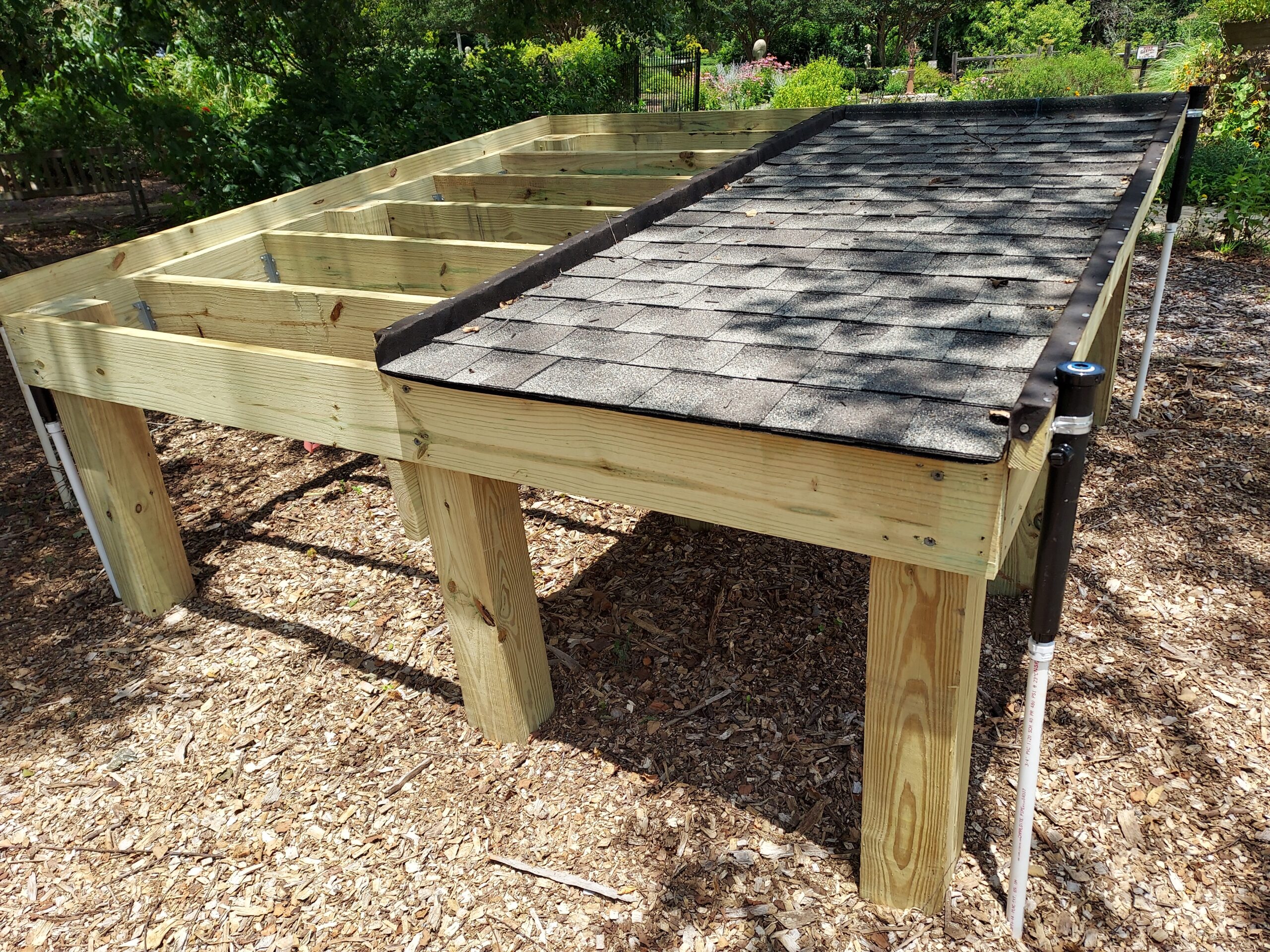
The right half of the display features standard roof wrap membrane and asphalt shingles, demonstrating how a traditional roof surface sheds water directly into gutters with no interception or retention.
Irrigation
The display includes an irrigation system with a nearby supply line feeding four spray heads (two for each roof surface). This allows visitors to see water behavior during simulated rain events. Irrigation for the green roof plants can be controlled with a moisture sensor to maintain plant health during extended dry periods. An irrigation system is optional for intensive green roofs, and may only need a temporary setup for establishment or drought periods. The plant species should be able to survive short periods of drought for 3 to 4 weeks. If your location gets plenty of rainfall (3 to 4 inches a month on average), you may not need irrigation for the green roof. Intensive green roofs (those with soil media deeper that 6 inches and shrubs or turf grass) may require an irrigation system.
While full-scale green roof installations require professional engineering assessment, homeowners can apply green roof principles in several accessible ways:
• Small shed or garage roofs can support extensive green roof trays with lightweight growing media and Sedum species
• Tabletop models (like this demonstration) make excellent educational features for schools, community gardens, or Master Gardener programs
• Green roof principles apply to living walls and vertical garden systems at a smaller scale
• Consider consulting a structural engineer before adding any green roof system to an existing structure
The Georgia Stormwater Management Manual, Volume 2: Technical Handbook (2016) provides detailed engineering specifications for green roof systems in stormwater compliance applications. Additional resources are available through the Green Roofs for Healthy Cities organization and the American Society of Landscape Architects.