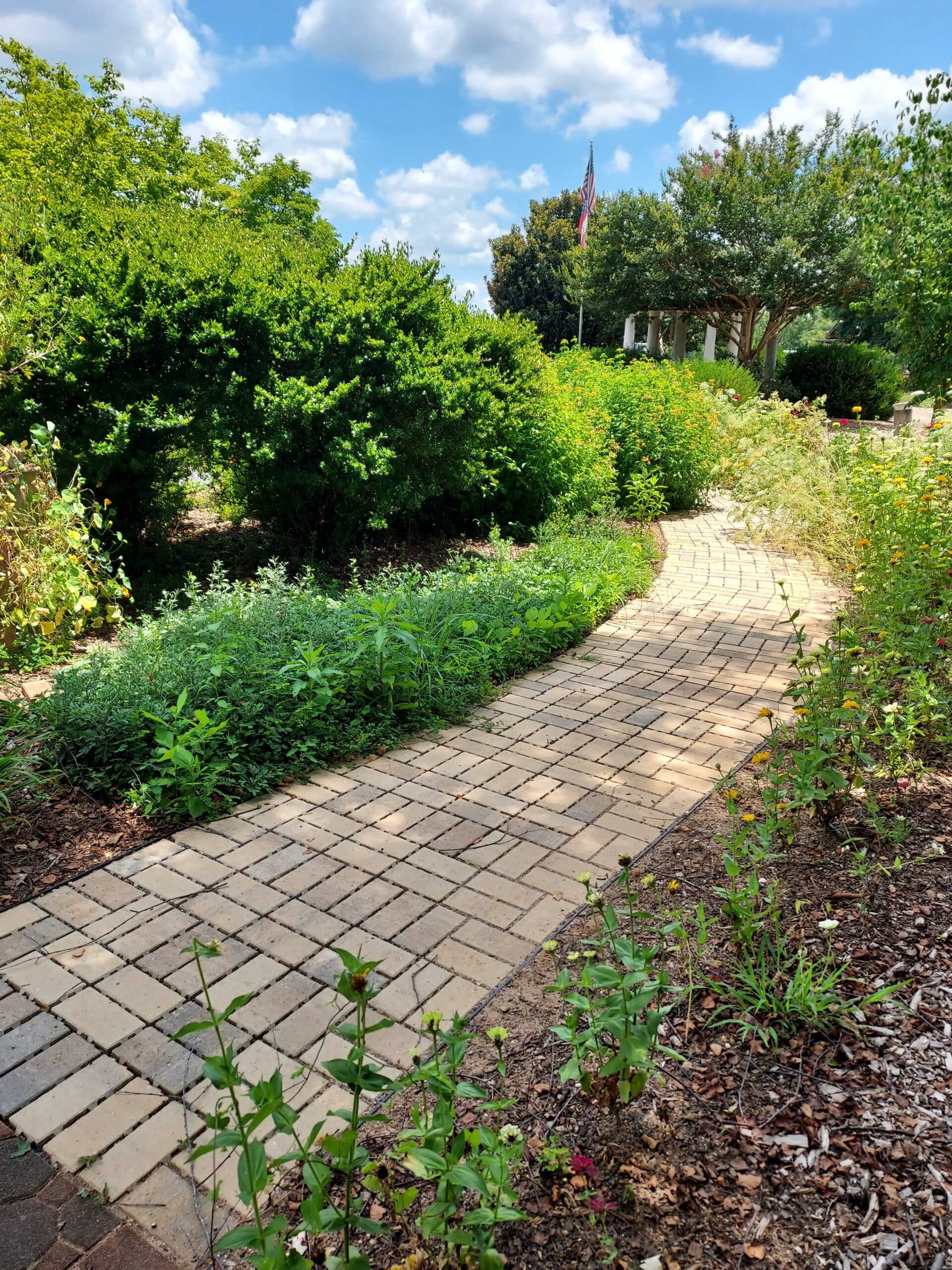
Pervious paver blocks allow stormwater to infiltrate between them to the ground below. Layers of rock beneath the pavers absorb rainfall into void spaces between angular-shaped stone, where it can slowly infiltrate into the soil. These systems provide a durable, attractive alternative to conventional impervious pavement while significantly reducing stormwater runoff.
See the in Action
Permeable interlocking paver blocks consist of manufactured concrete units that leave small openings between joints. These joints are filled with permeable small-sized stone aggregates that allow water to pass through the surface and into stone reservoir layers beneath. During and after rain events, stormwater infiltrates the soil below the stone layers. Additional drain pipes in the rock layer can be used to channel stormwater to another infiltration area underground
Practice Type: Surface infiltration through permeable pavement joints
Applications: Sidewalks, patios, parking spaces, driveways, low-speed roadways
Subsurface Layers: 12 inches combined stone base and sub-base
Soil Requirement: Infiltration rate of at least 0.5 inches per hour
Slope Limit: 0.5% or less for proper infiltration
Maintenance
Task
Frequency
Details
Weed removal
During growing season
Pull weeds or apply herbicide spray to prevent root intrusion into joint material
Debris removal
Seasonally
Blow leaves and debris from pavers and nearby drainage areas to prevent organic matter clogging
Joint inspection
Annually
Check for broken pieces or empty/low spots in joint fill material; replace and refill as needed
Sediment removal
As needed
Remove sediment accumulation on pavers from nearby erosion sources; stabilize erosion sources with vegetation or mulch
Adjacent vegetation
Ongoing
Prevent landscaping plants from growing across pavers and accumulating debris
Permeability restoration
As needed
If joint permeability decreases, a walk-behind vacuum sweeper can restore function; refill joint material lost to vacuuming
Severe clogging
As needed
Dig out small sections of joint fill with narrow implements to paver depth; refill with new material
Subsurface Layers (Top to Bottom)
• 1.5-inch top bedding course (filter layer) of sand (ASTM C-33 concrete sand or GA DOT Fine Aggregate Size No. 10)
• Geo-synthetic filter fabric
• Base reservoir: 4 inches of No. 57 stone
• Sub-base reservoir: 8 inches of No. 2 stone (crushed, angular, 1.5–2.5 inches in diameter)
• Geo-synthetic filter fabric on prepared subgrade soil
Soil Preparation
The soil below stone layers should have a water infiltration rate of at least 0.5 inches per hour. If not, the soil can be amended with 30% sand and 30% loam to a 1-foot depth. Avoid soil compaction of the bottom during construction by keeping heavy vehicles or equipment off the prepared subgrade.
Testing Soil Infiltration Capacity
Dig a 2-foot-deep hole. Fill the hole with 6 inches of water. If the water drains from the hole in 12 hours, the infiltration rate is 0.5 inches per hour. Run this test twice to confirm moist soil can still infiltrate at an acceptable rate.
Compaction and Finishing
Compact the base and sub-base stone layers with a vibratory roller (if available) or plate compactor at 6-inch fill intervals or at changes in stone size layers. This will stabilize the sub-base and allow for 40% void space for rainwater storage. The paver blocks are to be flush with the surrounding surface, then joints are filled with sand.
Pervious paver blocks are well suited for residential driveways, patios, walkways, and individual parking spaces. They provide the structural durability of conventional pavement with the stormwater benefits of a permeable surface. Homeowners considering pervious pavers should assess their soil conditions, ensure adequate slope, and plan for ongoing joint maintenance.
Further information regarding design and function can be found in the Georgia Stormwater Management Manual, Volume 2: Technical Handbook (2016). Design professionals should also reference EPA’s best management practices guidance for permeable pavements.