Sizing Example
A 160-square-foot impervious surface (such as one parking space) will produce about 13 cubic feet of water during a 1-inch rainfall event. A pervious grid system with a 3-inch-deep reservoir of proper stone (1.5- to 2.5-inch diameter gravel, or No. 2 stone) with 40% void space will capture all of that stormwater and allow it to slowly soak into the ground.
Subgrade Preparation
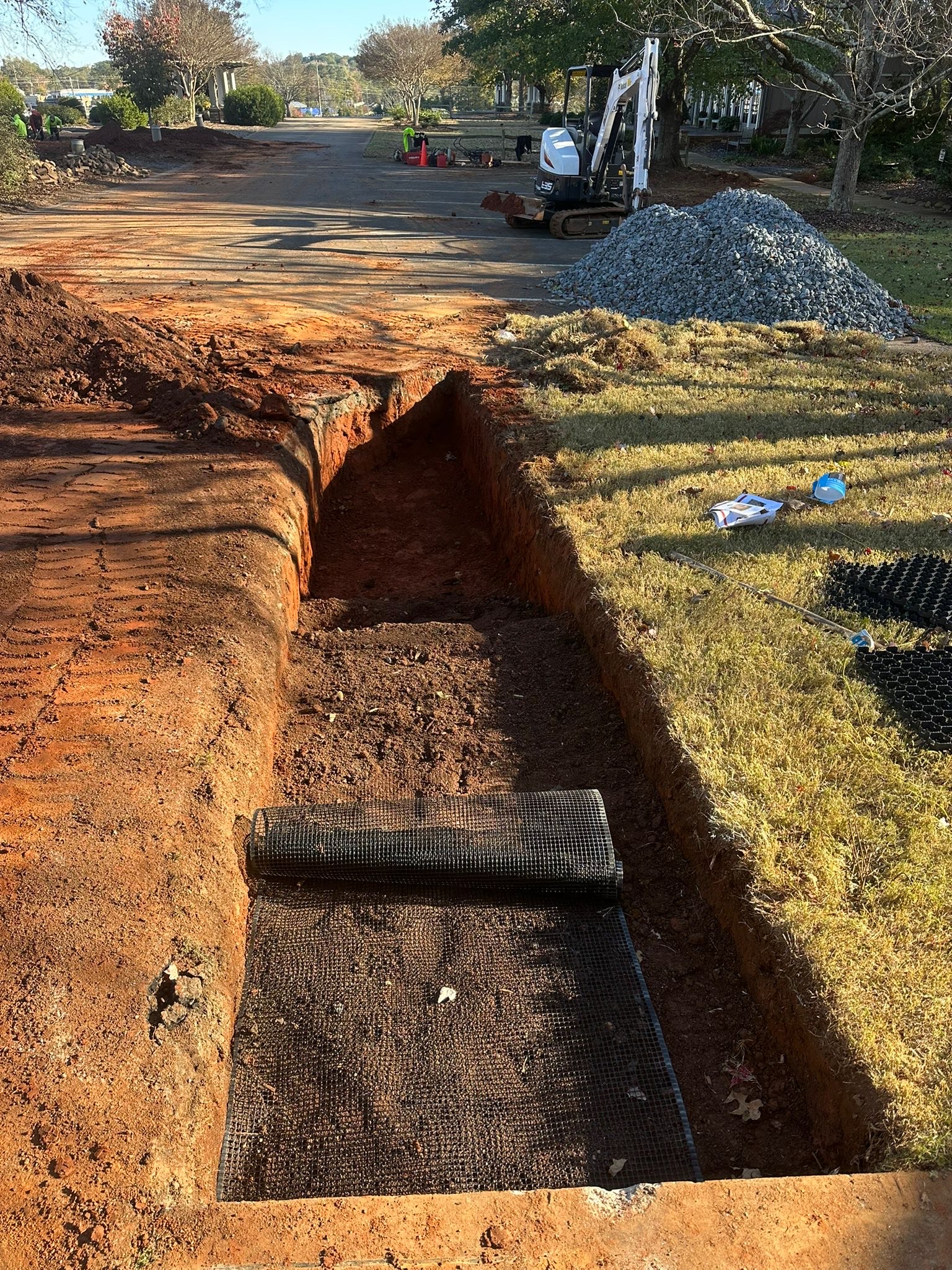
The subgrade soil at the bottom should have no slope (0%) and a water infiltration rate of at least 0.5 inches per hour. If it does not drain quickly enough, it can be amended with sand and loam to create a 30% sand, 30% loam, 30% native topsoil mix to 1 foot of depth below the bottom layer of stone. Avoid soil compaction during construction. There should be at least 2 feet of clearance between the stone base layer and any underlying high groundwater tables.
Testing Soil Infiltration Capacity
Dig a 2-foot-deep hole. Fill the hole with 6 inches of water. If the water drains from the hole in 12 hours, the infiltration rate is 0.5 inches per hour. Run this test twice to confirm moist soil can still infiltrate at an acceptable rate.
System Layers (Top to Bottom)
• Interlocking plastic grid panels filled with gravel (1/2 inch or smaller), shell, or loam soil for seeding grass; alternatively, sod can be rolled on top after filling with loam
• Optional 1-inch bedding layer of fine sand
• Geotextile erosion fabric
• Compacted sub-base of clean angular 1.5- to 2.5-inch stone (No. 2 stone) at appropriate depth for stormwater volume
• Thin plastic geo-grid (for heavier traffic) or erosion fabric (for light traffic) at subgrade level
• Prepared subgrade soil with adequate infiltration rate
Installation Notes
Compact the sub-base stone to solidify the base and create approximately 40% void space for rainwater storage. Place geotextile fabric on top of the stone before laying the optional sand bedding layer. Set the interlocking plastic grids flush with the surrounding surface, then fill with chosen material. If using grass sod, account for its thickness when planning grid depth and surrounding surface level, and press the sod into grid openings to make contact with the bedding layer below.
Pervious grids are ideal for homeowners looking to create stable parking areas, reinforce erosion-prone lawn sections, or build attractive walkways without adding impervious surface. The grass-filled option is particularly popular for overflow parking areas that need to remain green, and the gravel option works well for patios and low-maintenance walkways.
Some stormwater mitigation projects required by government agencies for new construction permits may need different depths or volumes for stormwater storage, which will be determined by the agency and stormwater engineers. The Georgia Stormwater Management Manual, Volume 2: Technical Handbook (2016) provides detailed specifications for pervious surface systems.