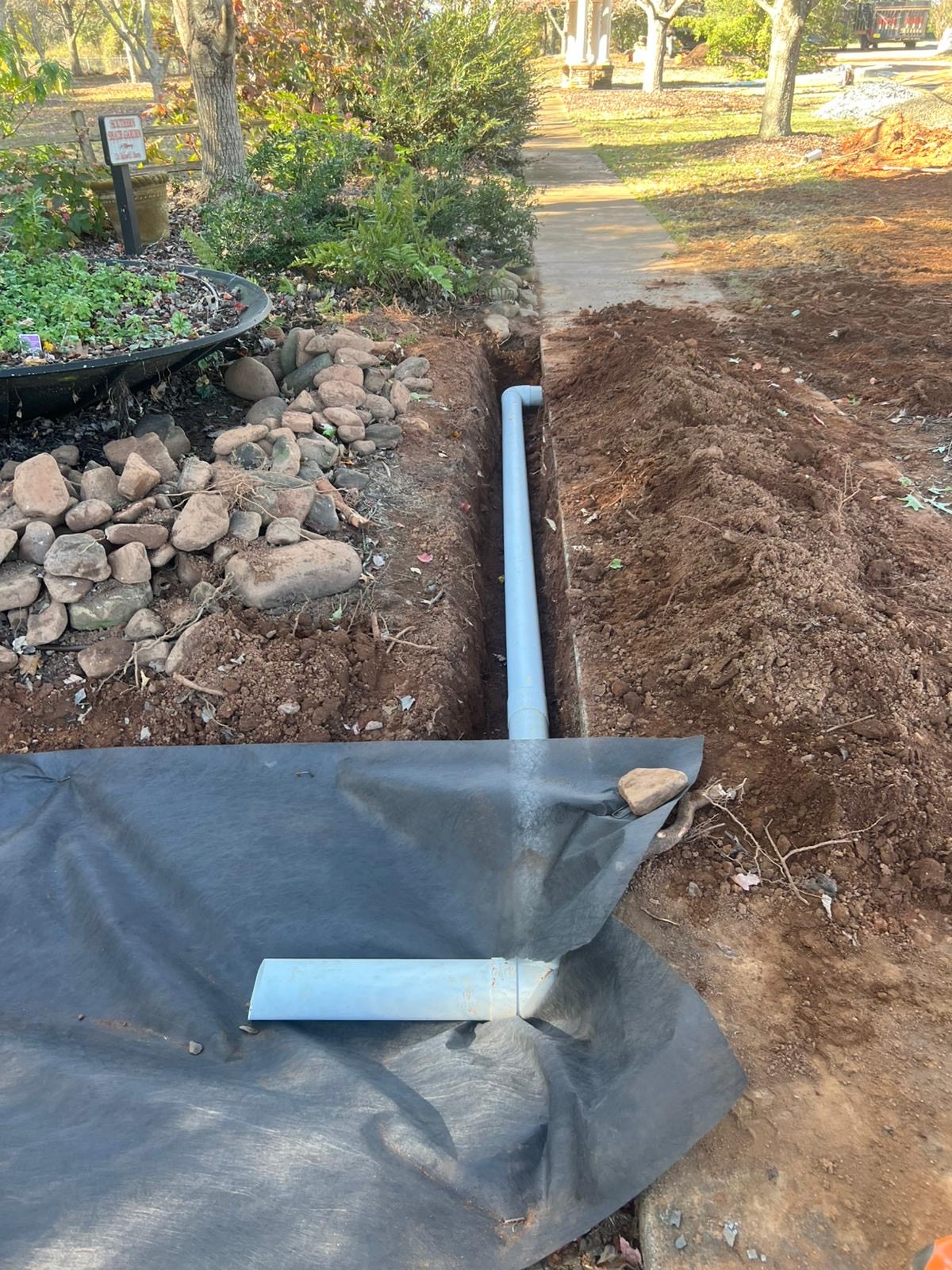
A French drain is a subsurface drainage system that intercepts and redirects groundwater and surface water away from problem areas. Using a perforated pipe surrounded by gravel in a lined trench, it collects water and channels it to a designated discharge point—preventing pooling, erosion, and foundation damage.
See the in Action
Water enters the trench through the surrounding soil and the gravel fill at the surface. It flows through the gravel into the perforated pipe, which carries it by gravity to the discharge point. The geotextile fabric lining prevents soil from migrating into the gravel and clogging the system, while the stone provides structural support and additional water storage capacity.
Practice Type: Subsurface water interception and conveyance
Trench Dimensions: 18 in. deep x 18 in. wide
Pipe: 4-inch perforated pipe (perforated on underside only)
Stone: No. 2 stone encasing pipe; No. 4 river gravel top layer
Best For: Areas with persistent pooling, soggy lawns, or surface flow near structures
Maintenance
Task
Frequency
Details
Surface inspection
After heavy rain events
Check for ponding or slow drainage that may indicate clogging
Gravel surface
Annually
Top off river gravel if it has settled or been displaced; maintain even surface
Inlet and outlet check
Twice yearly
Ensure both ends are clear of sediment, roots, and debris
Vegetation management
Ongoing
Prevent roots from growing into the trench area; keep turf trimmed along edges
System flush
As needed
If drainage performance declines, flush pipe with water from a garden hose at the upstream end
Design Specifications
Trench Construction
• Trench: 18 inches deep by 18 inches wide
• 4-inch drainage pipe perforated on the underside only
• Nonwoven geotextile fabric lining the trench and encasing the pipe
• No. 2 stone encasing the pipe within the geotextile fabric
• Pipe positioned 3 inches above the trench bottom
• Top 3 inches of trench filled with No. 4 river gravel for a finished surface appearance
• Lawn edging (such as Oly Ola or similar) at 4 3/4 inches deep to contain gravel and separate from adjacent lawn
French drains are one of the most versatile and widely used residential stormwater solutions. Common homeowner applications include:
• Directing downspout runoff away from foundations to a rain garden or other infiltration area
• Draining soggy lawn areas caused by poor surface grading or high water tables
• Intercepting slope runoff before it reaches patios, walkways, or driveways
• Connecting multiple stormwater practices (such as routing rain barrel overflow to a dry well)
Most homeowners with basic excavation skills can install a French drain as a weekend project. For larger systems or those near building foundations, consult a landscape professional or engineer.
French drains are addressed in the Georgia Stormwater Management Manual as a conveyance practice that can be integrated with other stormwater controls. For compliance applications, consult the manual for sizing requirements and discharge specifications.