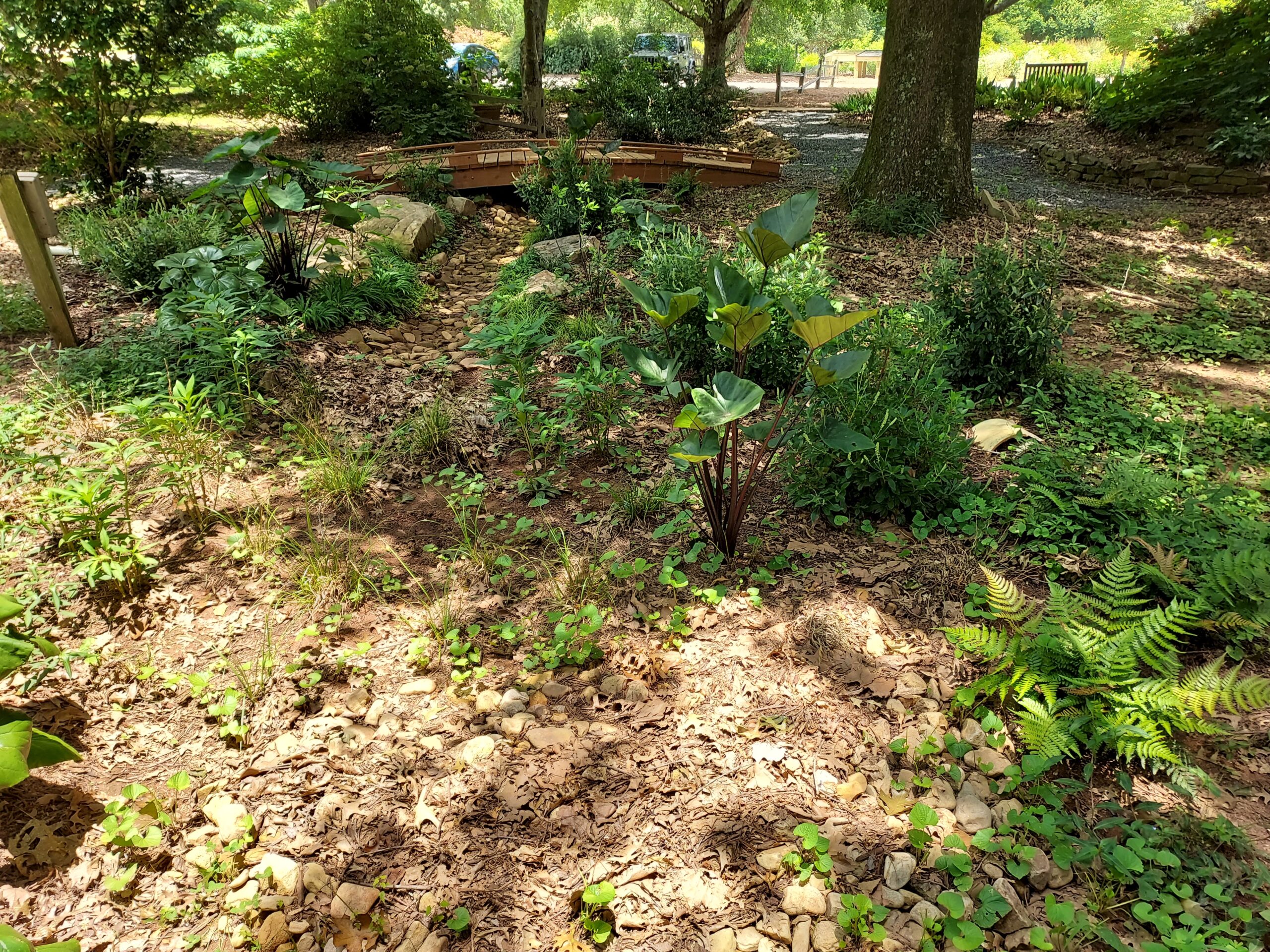
A bioswale is a vegetated, gently sloped channel designed to convey, filter, and infiltrate stormwater runoff. Planted with native and adapted species and lined with stone, bioswales slow water velocity, filter pollutants, and allow infiltration as water moves through the landscape—combining conveyance with treatment.
See the in Action
At the demonstration site, the bioswale receives water flowing from the existing dry creek bed, downstream of the foot bridge. As water moves through the channel, plants and boulders slow its velocity and spread the flow across the swale width. The slowed water has time to infiltrate into the soil and to deposit suspended sediment before reaching the rain garden downstream.
Practice Type: Vegetated conveyance and filtration channel
Dimensions: Approximately 15 ft. long x 6 ft. wide
Slope: Less than 2% downstream (no more than 4 in. drop from beginning to end)
Features: Native plants, 18-inch boulders, medium flat river rock
Cost Range: $5 to $25+ per square foot (materials and labor)
Water Flow: Receives water from the dry creek bed; directs flow to the rain garden
Maintenance
Task
Frequency
Details
Prune and trim
Late winter (Jan.–Feb.)
Prune woody shrub plantings and trim back dead winter foliage
Divide plants
Spring
Thin or divide spreading overgrown plants to maintain channel capacity
Mulch inspection
Spring
Verify mulch depth of 2–3 inches; add mulch as needed
Weed control
Spring and fall
Pull weeds from bioswale and any vegetated curb plantings
Drainage monitoring
Summer
Monitor for proper drainage (no standing water after 72 hours); irrigate in drought conditions
Vegetation in creek bed
Late summer
Remove undesirable vegetation from the dry creek bed by trimming or targeted herbicide
Erosion inspection
Fall
Visual inspection for erosion spots or missing plants; replace as needed
Sediment and debris
Late fall
Remove excess sediment, leaves, or debris at inlet and overflow outlet areas
Design Specifications
• Channel length approximately 15 feet, width approximately 6 feet
• Channel downstream slope less than 2% (no more than 4 inches of drop from beginning to end)
• Native and adapted plant species installed in the channel and along banks
• Three groupings of 18-inch boulders for rock features and flow dissipation
• Medium flat river rock along the channel bottom for erosion protection
• Positioned along the existing dry creek bed, downstream of the existing foot bridge
Residential bioswales work well along driveways, property boundaries, or at the base of slopes where runoff concentrates. A home-scale bioswale can be as simple as a shallow, planted channel that directs runoff from a downspout or driveway to a rain garden or infiltration area. Key considerations include maintaining a gentle slope, selecting plants that tolerate wet-dry cycles, and using stone at inlet and outlet points to prevent erosion.
The Georgia Stormwater Management Manual, Volume 2, Section 4.8 (page 209) addresses dry enhanced and wet enhanced swales in detail. Design professionals should reference this section for compliance-level specifications, including sizing calculations and treatment capacity requirements.