Design Specifications
Garden Construction
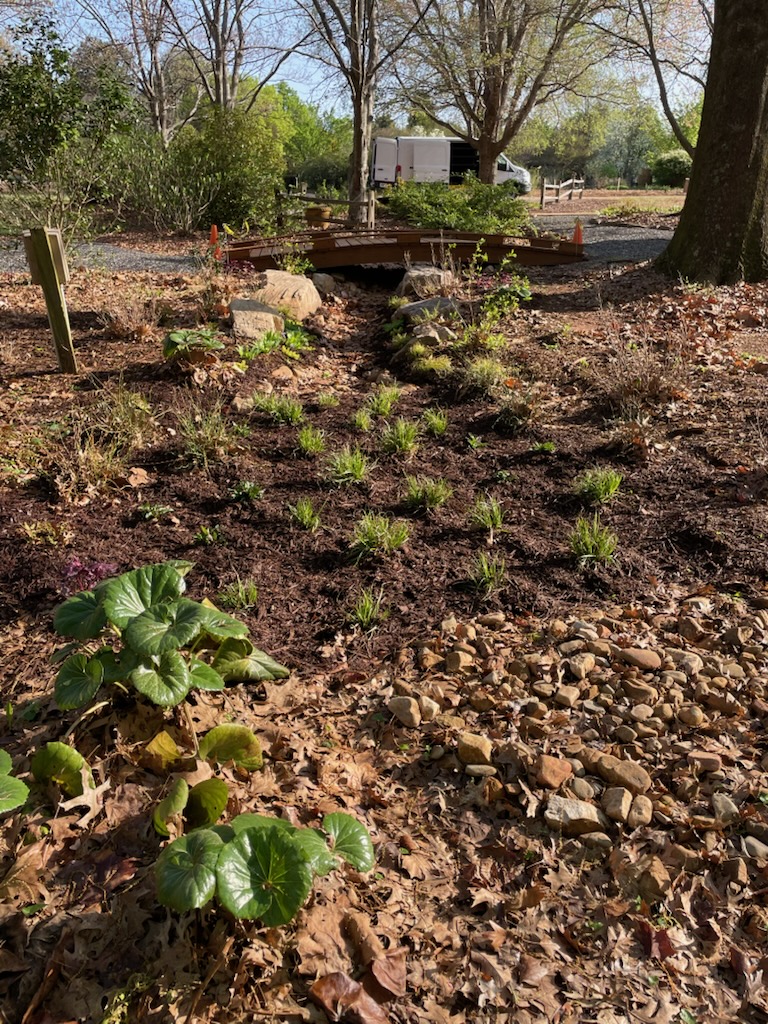
• 10-foot diameter basin including outer edge of slopes (approximately 80 square feet)
• 7-foot level basin at the bottom
• 3:1 slope on the sides for safety and mowing access
• 6-inch ponding depth
• Berm and excavated perimeter to 6-inch pond depth
• Outlet height rock apron below inlet height elevation by 3 inches
• 18-inch depth of amended rain garden soil mix: 50–60% sand, 20–30% topsoil, 20–30% compost
• 2–3 inch mulch (wood chip) layer on top of soil
• Three small boulder groupings for rock features on slopes
• Flat river rock at inlet and outlet to spread water flow and reduce erosion
Location Considerations
• Underground utilities must be located and avoided
• High water tables must be more than 2 feet below the rain garden bottom
• Slopes less than 12% (will need leveling in the garden and a berm on the downslope edge)
Plant Selection
Any Zone (Upland, Slope, or Inner)
• Christmas Fern (Polystichum acrostichoides)
• Wild Geranium (Geranium maculatum)
• Rosy Sedge (Carex rosea)
• Golden Groundsel (Packera aurea)
• Foamflower (Tiarella cordifolia)
• Autumn Fern (Dryopteris erythrosora)
• Spiderwort (Tradescantia virginiana)
• Little Brown Jug (Hexastylis arifolia)
• Tall Bellflower (Campanula americana)
• Black Cohosh (Actaea racemosa)
• Columbine (Aquilegia canadensis)
• Lady Fern (Athyrium filix-femina)
• Daylily (Hemerocallis spp.)
• Lenten Rose (Helleborus spp.)
• Hardy Begonia (Begonia grandis)
• Green and Gold (Chrysogonum virginianum)
• Eastern Teaberry (Gaultheria procumbens)
Low Inner Wet Basin Only
• Great Blue Lobelia (Lobelia siphilitica)
• Cinnamon Fern (Osmunda cinnamomea)
• Tufted Hair Grass (Deschampsia caespitosa)
• Wild Ginger (Asarum canadense)
• Winterberry (Ilex verticillata)
• Astilbe (Astilbe x arendsii)
• Spotted Trillium (Trillium maculatum)
• Round-lobed Hepatica (Hepatica americana)
• Turtlehead (Chelone lyonii)
• Meadow Phlox (Phlox maculata)
• Common Elephant’s Foot (Elephantopus tomentosus)
• Jewelweed (Impatiens capensis)
• River Oats (Chasmanthium latifolium)
Native plant nursery sources are available through the Georgia Native Plant Initiative at the State Botanical Garden of Georgia (botgarden.uga.edu).
Rain gardens are among the most popular residential stormwater practices because they combine function with beauty. A home rain garden can be as small as 50 square feet and still make a meaningful difference in managing runoff from a roof, driveway, or patio.
• Position the garden at least 10 feet from building foundations and downslope from the runoff source
• Test soil infiltration before construction; amend with sand and compost if drainage is slow
• Select plants native to your region that tolerate wet-dry cycles
• Mulch heavily at planting to suppress weeds during establishment
• Plan to water during the first growing season to help plants establish deep root systems
The Georgia Stormwater Management Manual, Volume 2: Technical Handbook (2016) provides detailed sizing calculations, soil specifications, and design guidance for rain gardens in compliance applications. The UGA Cooperative Extension also offers resources on rain garden design for Georgia conditions.