System Components
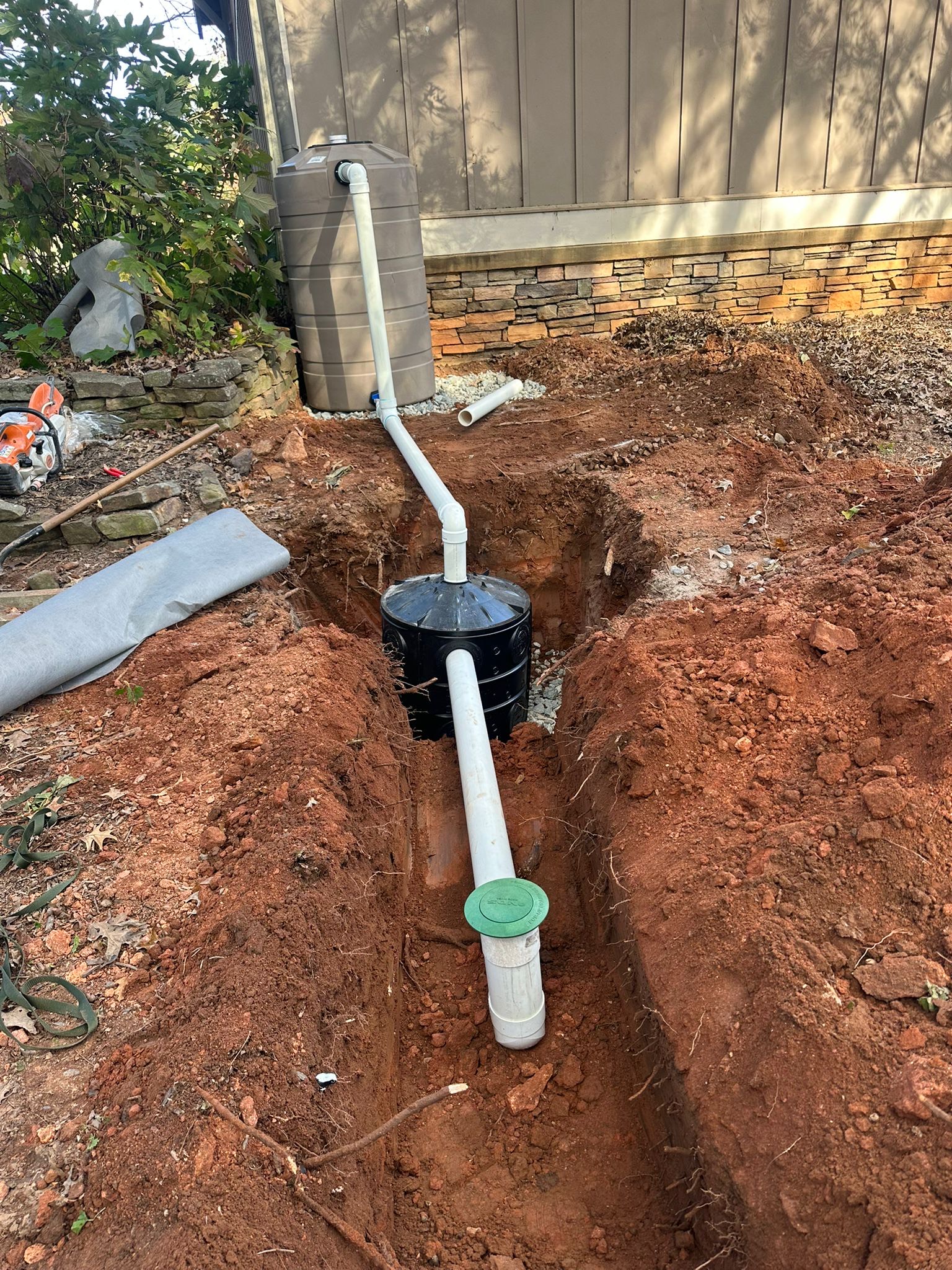
• 200-gallon capacity cistern (42 in. high x 40 in. wide)
• Gutter with leaf guard on building roof
• Downspout pre-filter screen installed 5 ft. off the ground
• Downspout connection fitted with mosquito screen at cistern top
• Inspection and cleaning port for interior access
• Bulkhead to overflow (1.5 in. diameter) near top of cistern
• Bulkhead to drain (2.5 in. diameter) at bottom of cistern
• Bulkhead to hose faucet (12 in. above ground) for irrigation use
• Valve partially open for passive stormwater drawdown
• 2.5-inch to 1.5-inch tee fitting at drain outlet
• Drain pipe with minimum 1% slope to dry well connection
• Compacted level gravel pad (No. 57 stone), 50 x 50 inches, contained with landscape edging
Cistern Placement
• On solid pad or wood/block frame, fine sand, fine gravel, or cement
• Water weighs 8 pounds per gallon (a full 200-gallon cistern weighs approximately 1,670 pounds with the container)
• Check HOA rules; consider plant screens for visual concealment
• Account for electricity availability (if pump is needed), distance to irrigation area, and topography
• Underground tanks require consideration of subsurface utilities
You can implement simple stormwater management practices at home to reduce your environmental impact. Here are a few ideas:
* **Install a Rain Barrel:** Collect rainwater from your roof and use it to water your garden.
* **Create a Rain Garden:** Plant a small rain garden in your yard to capture and filter stormwater runoff.
* **Use Pervious Pavers:** Replace traditional pavers with pervious pavers to allow water to infiltrate into the ground.
* **Reduce Impervious Surfaces:** Minimize the amount of concrete and asphalt on your property to allow more water to infiltrate into the ground.
By implementing these practices, you can help reduce flooding, improve water quality, and create a more sustainable environment.
Cisterns are an excellent step up from rain barrels for homeowners who want to capture more water or manage runoff from larger roof areas. Key considerations for residential installation include:
• Calculate your roof catchment area and local rainfall to size the cistern appropriately
• Ensure a stable, level foundation capable of supporting the full weight of the cistern
• Install proper pre-filtration to protect water quality and prevent mosquito breeding
• Check local regulations and HOA rules; some communities have specific requirements for rainwater harvesting systems
• Consider pairing the cistern with a dry well (Stop 9) for overflow and passive drawdown management
• Above-ground cisterns are more affordable and accessible for maintenance; below-ground options require professional installation but save space