Sizing
To design a dry well system, first consider the goal of your application. In most residential landscapes, the dry well is used to prevent flooding or serious soil erosion downhill of a rooftop or other impervious surface. A 10-foot by 10-foot rooftop that receives 1 inch of rainfall will deliver just over 60 gallons of water. If you need to collect more stormwater, either from a larger roof or heavier storm, you will need to scale up with a larger well or a series of small wells connected. Consider including some other stormwater control measure for overflow.
Construction Details
• Excavation must be at least 2 feet wider in diameter than the dry well and at least 1 foot deeper
• 1-foot-thick base of crushed and washed 3/4-inch stone (No. 57 stone)
• 1-foot-thick perimeter of the same stone around the outside of the dry well
• Erosion control filter fabric lining the excavation to prevent soil from filling the stone reservoir
• Native soils at the bottom tilled to 3–4 inches depth before placing stone
• Top of the dry well or observation port located as close to the surface as possible for accessibility
• Surrounding the cap: a layer of well-drained soil and turf grass or herbaceous plants
Overflow Management
Dry wells should be designed so that overflow stormwater drains away from buildings to prevent foundation damage or basement flooding. An overflow pop-up drainage emitter should be installed and designed to deliver excess stormwater from heavier rainfall events to another space on the landscape with acceptable infiltration rates (0.5 inches per hour or greater).
Pre-Treatment
If used to receive rooftop runoff, dry wells should be preceded by a leaf screen installed in the gutter or downspout to prevent clogging. If used to receive lawn or driveway runoff, dry wells should be preceded by a pea-gravel-filled catchment forebay and a vegetated filter strip to capture silt and sand before it clogs the interior surfaces. To help prevent soil compaction, heavy vehicular and equipment traffic and foot traffic should be kept out of the dry well area before, during, and immediately after construction.
Dry wells are an effective solution for homeowners dealing with localized flooding, downspout erosion, or saturated lawn areas. The installation process may require heavy digging machinery, such as a small excavator, to investigate soils below the dry well location. Key considerations include:
• Test your soil infiltration rate before committing to a dry well installation
• Size the well based on the impervious surface area contributing runoff
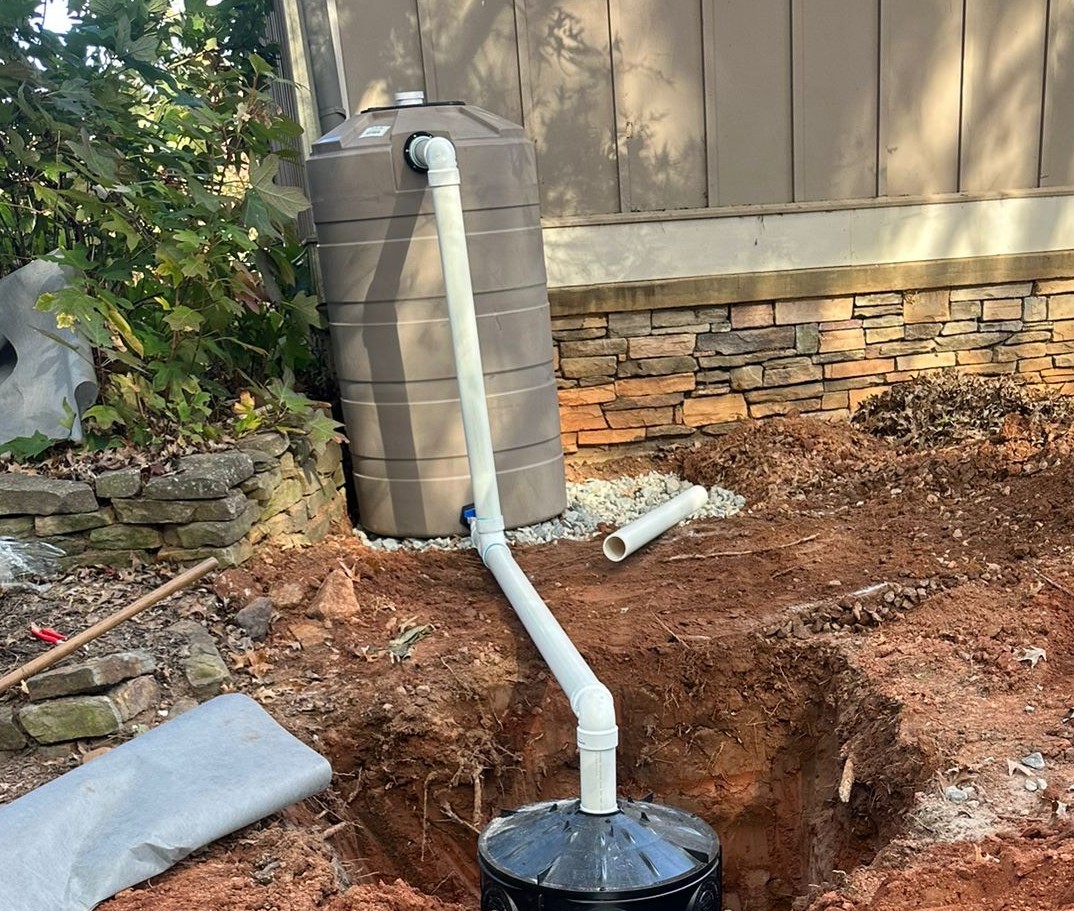
• Consider connecting the dry well to other practices (such as a cistern or rain barrel overflow) for a system approach
• Ensure the overflow pop-up emitter directs excess water to a safe, pervious area away from structures
• Plan for periodic inspection and cleaning to maintain long-term function
The Georgia Stormwater Management Manual, Volume 2, Section 4.7 (page 199) provides detailed engineering specifications for dry well systems in stormwater compliance applications, including sizing calculations for required runoff reduction targets.