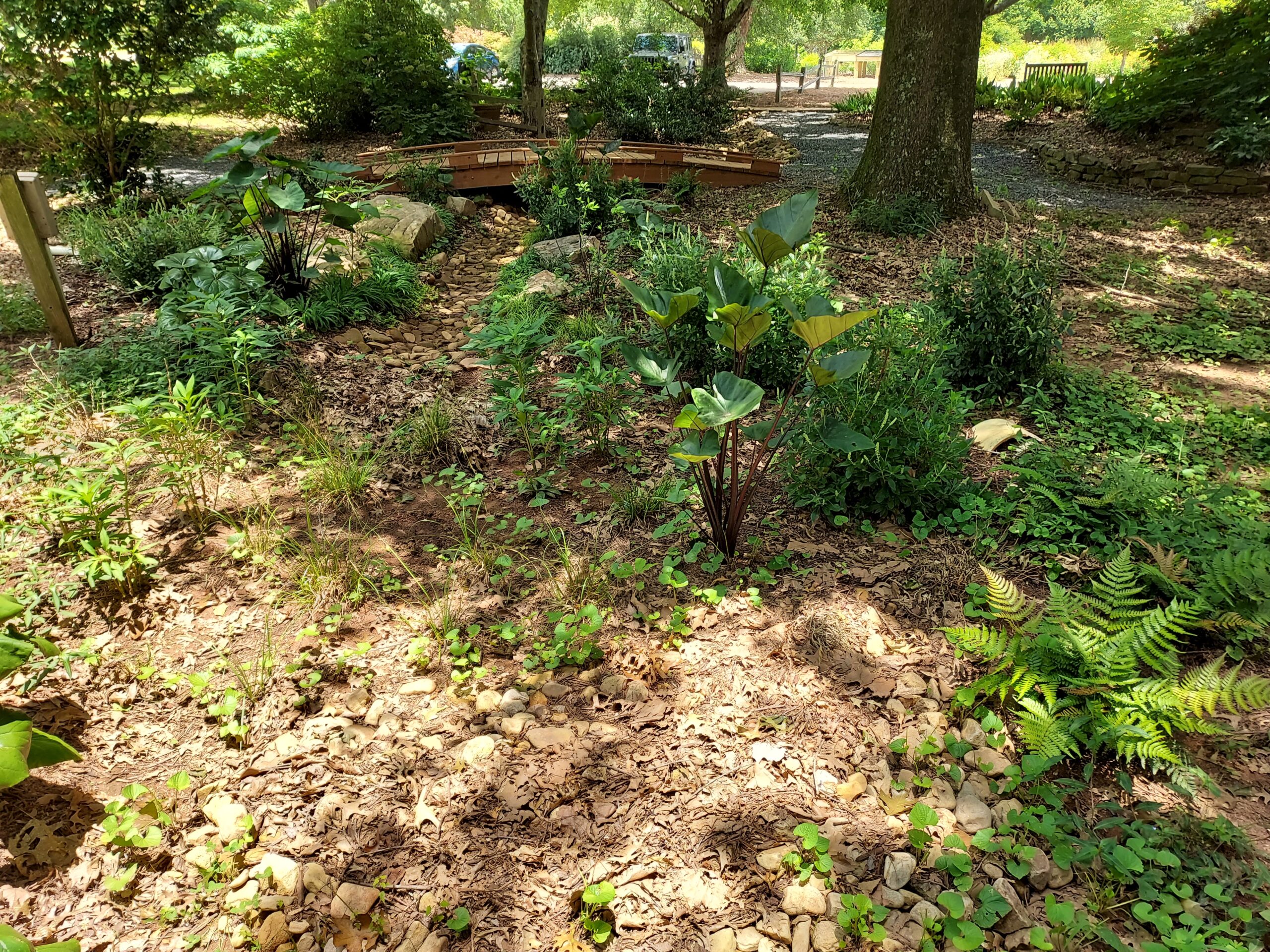
Design Specifications
• Channel length approximately 15 feet, width approximately 6 feet
• Channel downstream slope less than 2% (no more than 4 inches of drop from beginning to end)
• Native and adapted plant species installed in the channel and along banks
• Three groupings of 18-inch boulders for rock features and flow dissipation
• Medium flat river rock along the channel bottom for erosion protection
• Positioned along the existing dry creek bed, downstream of the existing foot bridge
Residential bioswales work well along driveways, property boundaries, or at the base of slopes where runoff concentrates. A home-scale bioswale can be as simple as a shallow, planted channel that directs runoff from a downspout or driveway to a rain garden or infiltration area. Key considerations include maintaining a gentle slope, selecting plants that tolerate wet-dry cycles, and using stone at inlet and outlet points to prevent erosion.
The Georgia Stormwater Management Manual, Volume 2, Section 4.8 (page 209) addresses dry enhanced and wet enhanced swales in detail. Design professionals should reference this section for compliance-level specifications, including sizing calculations and treatment capacity requirements.